


Fascial Unwinding
Where body and mind reconnect through gentle unwinding.

What is Fascial Unwinding?
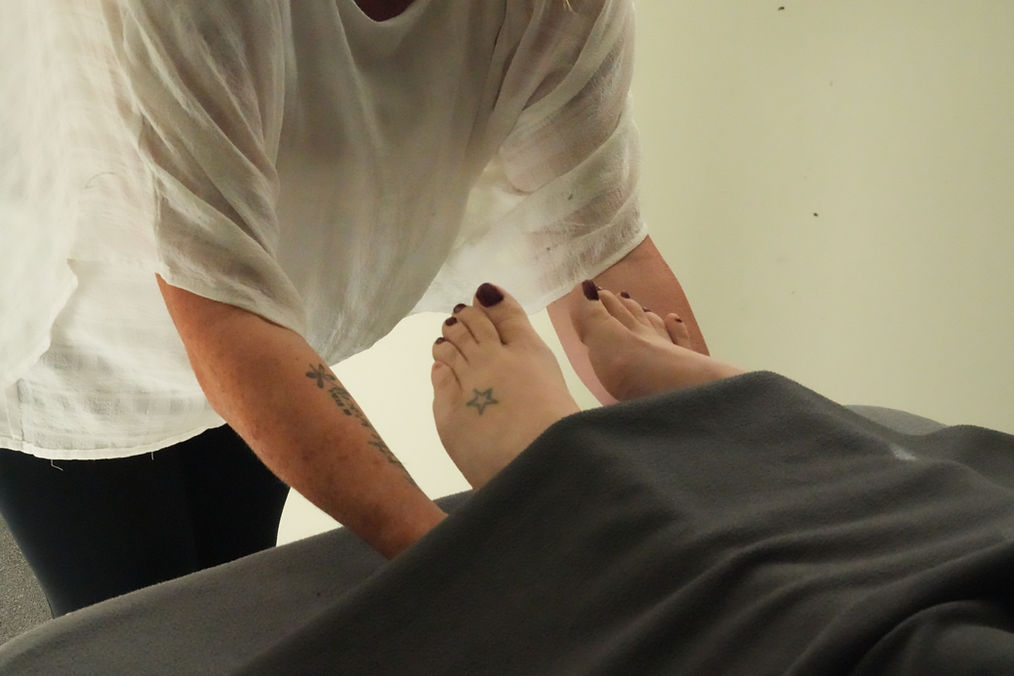
Fascial unwinding is a gentle, body-led approach where the client’s own tissue wisdom guides spontaneous, subtle movements. Instead of directing or correcting, the practitioner provides a supportive space, lightly following the body’s natural impulses toward ease.
Teachers such as Beth Beauchamp (Fascia IQ, NZ) speaks of “unwinding the body from the inside out,” showing how release can move in layered, interconnected ways.
Why does the fascia matter?
Fascia is the body’s connective web — a continuous network surrounding muscles, nerves, organs, and bones. It provides structure, supports posture, and responds to physical, emotional, and environmental influences. When restricted by injury, stress, or tension, it can cause pain or limit movement. Myofascial release helps restore the fascia’s natural flexibility and alignment. Fascia is also richly supplied with sensory nerve endings and mechanoreceptors, forming a communication network that transmits mechanical signals to muscles and the nervous system and helps shape movement and pain perception. Because fascia transmits tension across the body, restrictions in one area can affect distant sites, and gentle myofascial unwinding aims to release those held patterns — research suggests this can improve tissue elasticity, joint range of motion, and the body’s
internal sense of itself.
What happens in a session?
-
After a brief conversation and assessment, the practitioner makes gentle contact with hands in various holding positions. When the body feels safe, it seems to invite release — areas of tension, restriction, or sensitivity.
-
The practitioner will pause, listen, and follow any subtle, spontaneous movements the body initiates, supporting rather than directing.
-
At times, the practitioner may “lift to remove gravity,” gently easing gravitational pull so the body can move more freely.
-
The process is attuned, patient, and responsive, intuitively supporting fascia movement, until the body naturally signals readiness to stop.
What might the client experience?
-
Gentle ripples or stretches: small, wave-like motions or subtle rolls and extensions.
-
Spontaneous shifts: joints, limbs, or the spine may naturally soften or unwind.
-
Emotional or somatic release: sensations like sighs, tears, or warmth may arise as tension eases
-
Visual imagery or words: may be images, colours, words, messages, awareness that comes through, related to the clients personal journey.
-
Deep relaxation or re-grounding: the body finds a more natural alignment and ease.
-
Moments of stillness: pauses where the body seems to integrate changes.
What outcomes might it help with?
-
Relief from chronic tension patterns (neck, back, jaw, etc.)
-
Improved mobility and smoother movement
-
Reduced pain or sensitivity in fascial areas
-
Increased body awareness and ease of movement
-
Calmer, more balanced nervous system — many feel more grounded and resilient
-
Integration of emotional or stress release stored in the body

Training with Fascia IQ

I completed my training through Fascia IQ, earning a Certificate in Fascial Unwinding and an Advanced Certificate in Fascial Unwinding (Interoception).
The training was led by Beth Beauchamp, a fascia educator, medical massage therapist, and speaker at the 7th International Fascia Research Congress, who brings over 25 years of experience in fascia and bodywork.
Fascial Unwinding testimonials
I cannot recommend Michelle enough! I’ve had myofascial release and several fascial unwinding sessions with Michelle. I came in seeking physical relief for areas that had troubled me for years. After trying chiropractors, osteopaths, and massages, nothing has matched the depth of release and healing I’ve experienced through her work.
After just two sessions, the hip pain I’d been carrying for years was gone. My body feels like it’s flowing again without restriction. Each session brought different layers — both physical and emotional. I felt safe, supported, and increasingly regulated in my body. Recently, I experienced a significant emotional breakthrough that has been incredibly meaningful.
Michelle’s work is gentle yet incredibly powerful, and she holds such an intuitive, calm, grounded space. I would highly recommend her to anyone looking for some relaxation or deep, holistic bodywork. Carmen